Wiggle guide
Hip Extension Stretches: A Gentle 6-Minute Routine
Try five gentle hip extension stretches for sitting-heavy days, with a standing 6-minute routine, a quick form checklist, and clear stop signs.
hip extension stretches
Long sitting can make standing tall feel strangely difficult. You get up, take a few steps, and the front of the hips still feels folded while the lower back tries to do the extra movement.
Hip extension stretches give you a smaller target: help the thigh move gently behind the body without forcing a lunge or cranking the lower back. Use the six-minute routine below when you want a quick reset that starts standing and needs only a chair.
What are hip extension stretches?
Hip extension stretches are gentle positions that move the thigh behind the body while the pelvis and lower back stay controlled. They commonly target the front of the hip after sitting, but the useful goal is comfortable movement—not the deepest possible lunge.
Hip extension is the movement of the thigh behind the pelvis, such as when the rear leg travels back during walking. A stretch can explore that direction, while a bridge or controlled leg movement can strengthen it.
Use this fast decision rule: if you feel mild tension across the front of the back hip, keep the position. If you feel a pinch in the hip crease or pressure in the lower back, shorten the stance and make the movement smaller.
If you are unsure which hip direction feels limited, use the hip mobility test first. For a broader routine that covers rotation and side-to-side movement too, choose hip mobility stretches.
What is the easiest hip extension stretch for beginners?
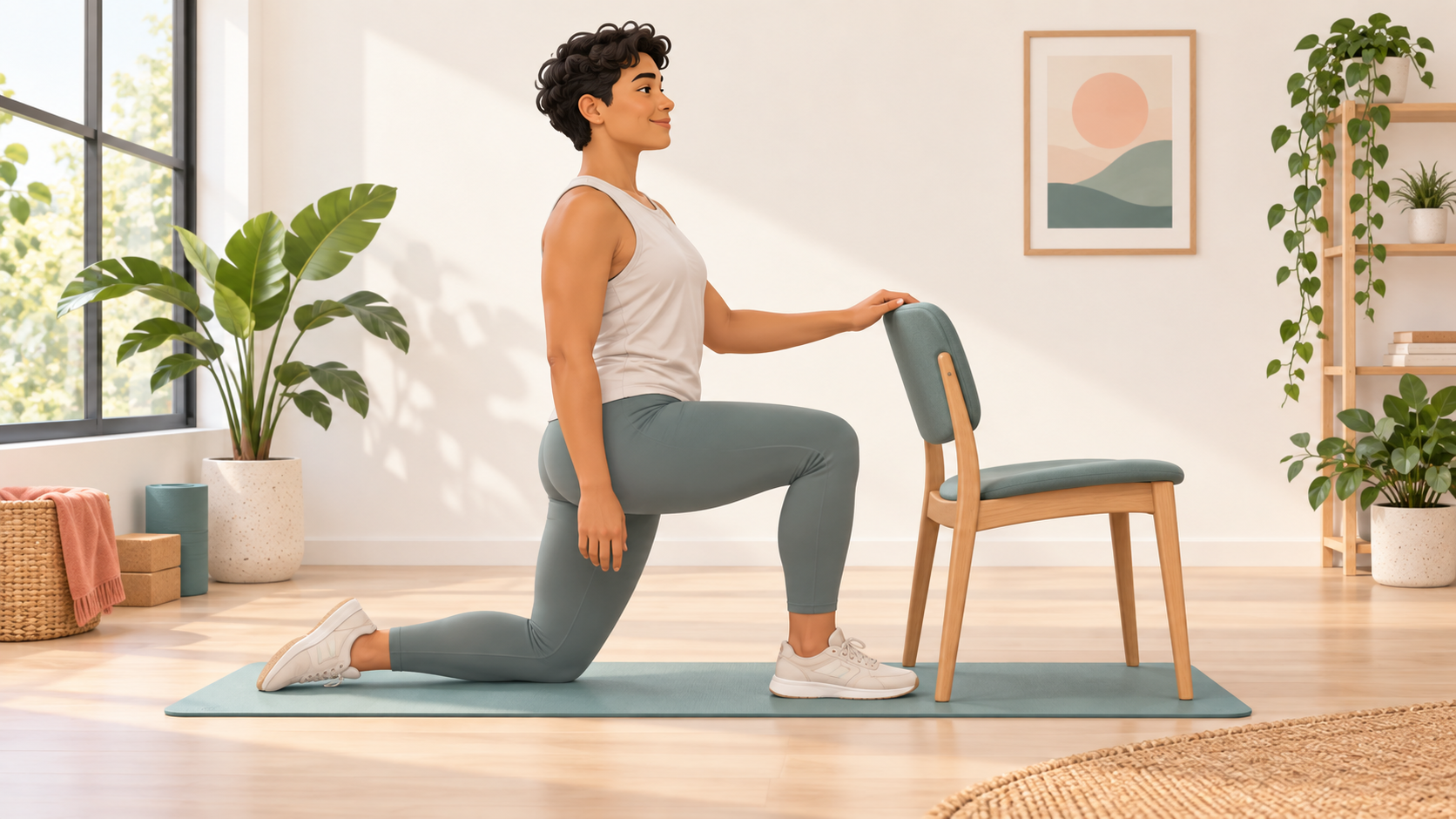
The easiest beginner option is a supported standing split stance. It keeps both knees off the floor, lets you control the range with a chair, and makes it easy to stop before the lower back arches.
- Stand beside a stable chair and hold it lightly.
- Step the right foot back into a short split stance.
- Point both feet forward and lift the back heel.
- Soften both knees.
- Gently tuck the pelvis as if bringing the belt buckle slightly upward.
- Shift forward one or two inches.
- Hold 20 to 30 seconds while breathing normally.
- Switch sides.
You should feel mild tension at the front of the back hip or upper thigh. Make the stance shorter if the back knee, hip crease, or lower back feels compressed.
From Wiggle
Recommended moves
What is the best 6-minute hip extension routine after sitting?
The best short routine combines easy walking, a supported standing stretch, a half-kneeling option, and a few controlled bridges. That gives you both gentle range and active control instead of holding one deep lunge for several minutes.
| Step | Time | What to do | Easier option | | --- | ---: | --- | --- | | Easy walk or march | 60 sec | Let the stride gradually lengthen | March beside a chair | | Supported split stance | 60 sec | 30 sec per side | Keep the stance short | | Standing leg-back reach | 60 sec | 30 sec per side, toes on floor | Move the foot only a few inches | | Half-kneeling hip stretch | 90 sec | 45 sec per side | Use a cushion or repeat standing | | Glute bridges | 90 sec | 6–10 slow repetitions | Lift only a few inches | | Easy walk | 60 sec | Notice whether standing feels easier | Keep the stride natural |
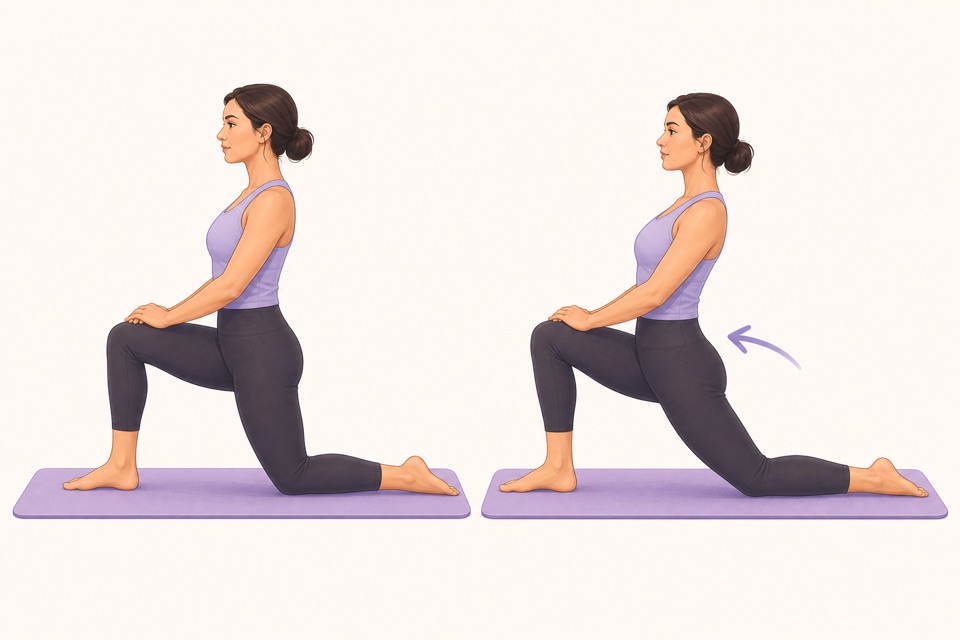
The half-kneeling step is optional. If kneeling is uncomfortable or getting to the floor is inconvenient, repeat the supported standing version. For a narrower front-of-hip guide, compare the hip flexor stretches and best hip flexor stretches routines.
How do you stretch hip extension without arching the lower back?
Keep the stance smaller, soften the ribs, and gently tighten the glute on the back-leg side before shifting forward. The moment the ribs flare or the lower back pinches, you have moved beyond the useful hip range.
Use this form checklist:
- Hold a wall or chair instead of fighting for balance.
- Keep the back foot and knee facing forward.
- Use a gentle pelvic tuck, not a hard abdominal brace.
- Keep the ribs stacked over the pelvis.
- Move the whole pelvis forward a small amount.
- Breathe normally throughout the hold.
- Stop before the stretch becomes a hip-crease pinch.
| What you notice | Best adjustment | Avoid | | --- | --- | --- | | Lower back arches | Shorten the stance and tuck gently | Leaning farther forward | | Front hip pinches | Reduce the range or return to walking | Forcing a deep lunge | | Back knee is uncomfortable | Use the standing version | Kneeling without padding | | Balance feels shaky | Hold a chair with both hands | Closing the eyes | | Mild front-thigh tension | Keep breathing and hold briefly | Bouncing |
Why does hip extension feel limited after sitting?
Hip extension can feel limited after sitting because the hips have spent a long time in a bent position and have not recently moved through the opposite direction. The feeling can also reflect movement habits, guarding, strength, anatomy, or symptoms that stretching should not attempt to diagnose.
Do not assume every front-of-hip sensation means a muscle is “short.” Start with a short walk, use mild range, and judge the routine by what happens afterward. The hip should feel the same or calmer—not irritated for the rest of the day.
Mayo Clinic recommends stretching with smooth movement, normal breathing, and without pain. The American Academy of Orthopaedic Surgeons also includes hip extension and hip-flexor work within a broader conditioning approach, which is a useful reminder that mobility and control belong together.
How often should you do hip extension stretches?
For ordinary sitting-related stiffness, try three to six minutes a few times per week or after a long sitting block. Start with 20- to 30-second holds and repeat only when the hip feels calm during and after the routine.
Choose the timing by the job:
- After sitting: walk for one minute, then use the supported split stance.
- Before a workout: keep holds brief and add controlled leg swings or bridges.
- After a workout: use the six-minute sequence if the hip feels normally stiff, not injured.
- Before bed: choose the standing version and keep the intensity low.
Stop if you feel sharp pain, pinching, numbness, tingling, weakness, catching, radiating symptoms, dizziness, or symptoms connected to an injury or health condition. New, severe, persistent, or worrying symptoms deserve guidance from a qualified healthcare professional.
How can Wiggle make hip extension easier to repeat?
Wiggle removes the part that usually kills the habit: deciding what comes next. A guided session can time each side, cue the switch from stretching to controlled movement, and give you a clear endpoint before “one more stretch” turns into irritation.
Open the Wiggle download page, choose a short hips or mobility routine, and use it after your longest sitting block. If your main goal is a deeper squat, move next to hip mobility for squats. If sitting itself is the recurring trigger, use stretches for tight hips as the broader reset.
Sources
Why we keep it gentle
These guides are written for everyday stiffness and habit-building. They are grounded in mainstream guidance on flexibility, movement, and when to seek medical help.
- A guide to basic stretchesMayo Clinic
- Exercise and Physical FitnessMedlinePlus
- Physical Activity Guidelines for AmericansU.S. Department of Health and Human Services
- Hip Conditioning ProgramAmerican Academy of Orthopaedic Surgeons
FAQ
Questions people ask
What are hip extension stretches?
Hip extension stretches are gentle positions that move the thigh behind the body while the pelvis and lower back stay controlled. A supported split stance or half-kneeling hip flexor stretch is the simplest place to start after long periods of sitting.
What is the easiest hip extension stretch for beginners?
Start with a supported standing split stance. Hold a chair, step one foot back, keep both feet pointing forward, gently tuck the pelvis, and shift forward until the front of the back hip feels mild tension.
Why do hip extension stretches sometimes affect the lower back?
The lower back may arch when the hip does not move comfortably behind the body. Use a smaller stance, lightly tighten the glutes and abdomen, and stop before the ribs flare or the lower back pinches.
How long should I hold a hip extension stretch?
Begin with 20 to 30 seconds per side for one or two rounds. The stretch should remain mild enough for normal breathing and should not leave the hip, knee, or lower back more irritated afterward.
When should I stop hip extension stretches?
Stop for sharp pain, pinching, numbness, tingling, weakness, catching, radiating symptoms, dizziness, or symptoms linked to an injury or medical condition. Seek professional guidance for new, severe, persistent, or worrying symptoms.