Wiggle guide
Leg Stretches Before Bed: A Calm 7-Minute Night Routine
Leg stretches before bed for heavy, tight, or restless-feeling legs, with a gentle 7-minute routine, stop signs, and sleep-friendly pacing.
leg stretches before bed
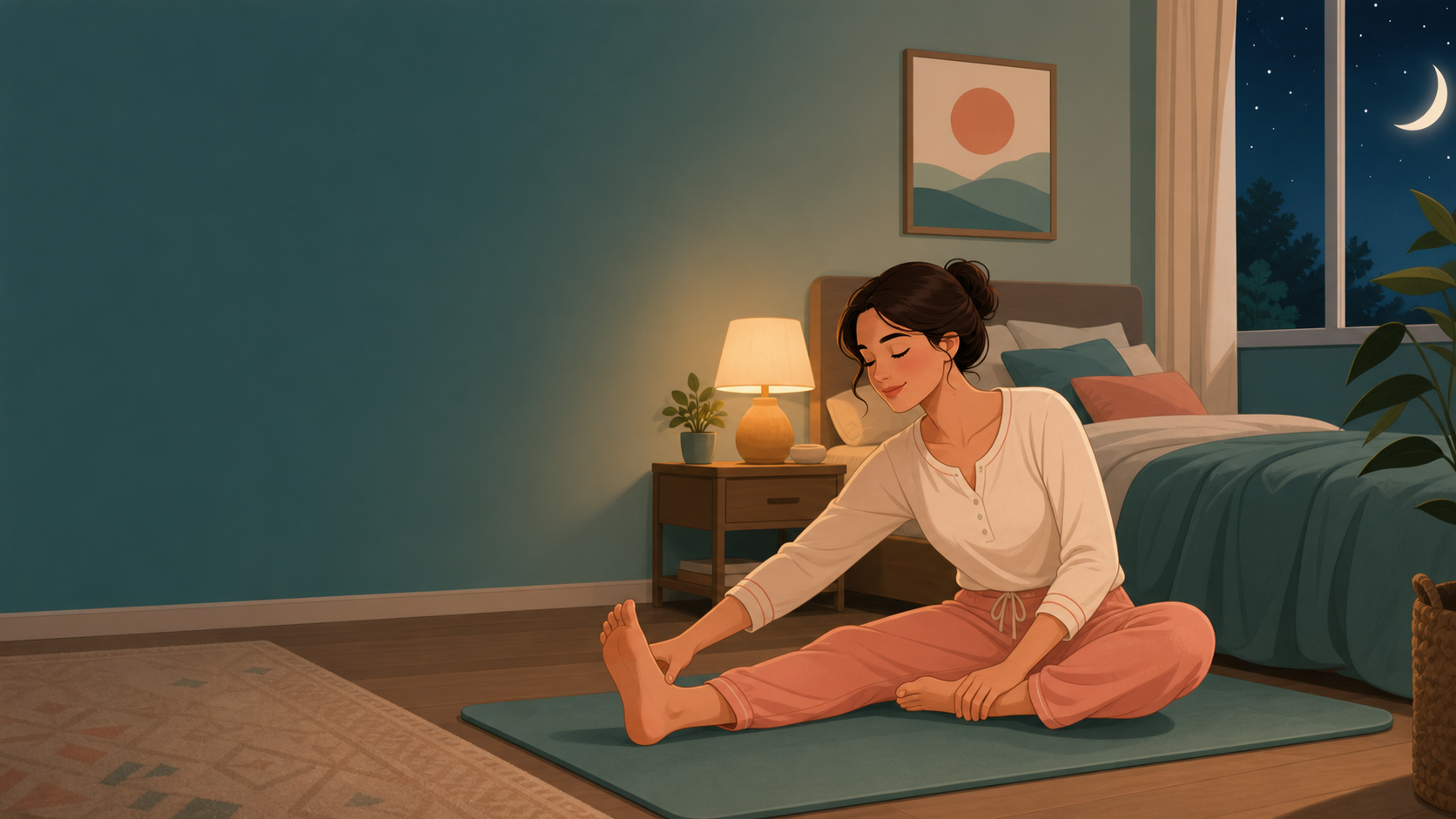
Your legs can feel loud at the exact moment you want the day to get quiet. Calves feel tight, hamstrings feel heavy, feet keep fidgeting, and a full workout is the last thing you want before sleep.
Use these leg stretches before bed when you need a calmer, lower-effort option. The goal is not to fix every nighttime sensation. The goal is to give your legs a predictable seven-minute wind-down that is easy enough to repeat.
What are leg stretches before bed?
Leg stretches before bed are low-intensity movements for the calves, hamstrings, quads, hips, and ankles done as part of a sleep wind-down routine. They should feel mild, steady, and boring in the best way.
This is different from flexibility training. At night, you are not chasing range or trying to prove toughness. You are lowering friction: fewer decisions, softer holds, and a clean ending that tells your body the routine is done.
Which leg stretches work best before sleep?
The best bedtime leg stretches are the ones you can do without raising your effort level. Start with ankles and calves, then move through hamstrings, hips, and a small quad stretch if it feels steady.
Use this routine on a mat, rug, or firm bed surface:
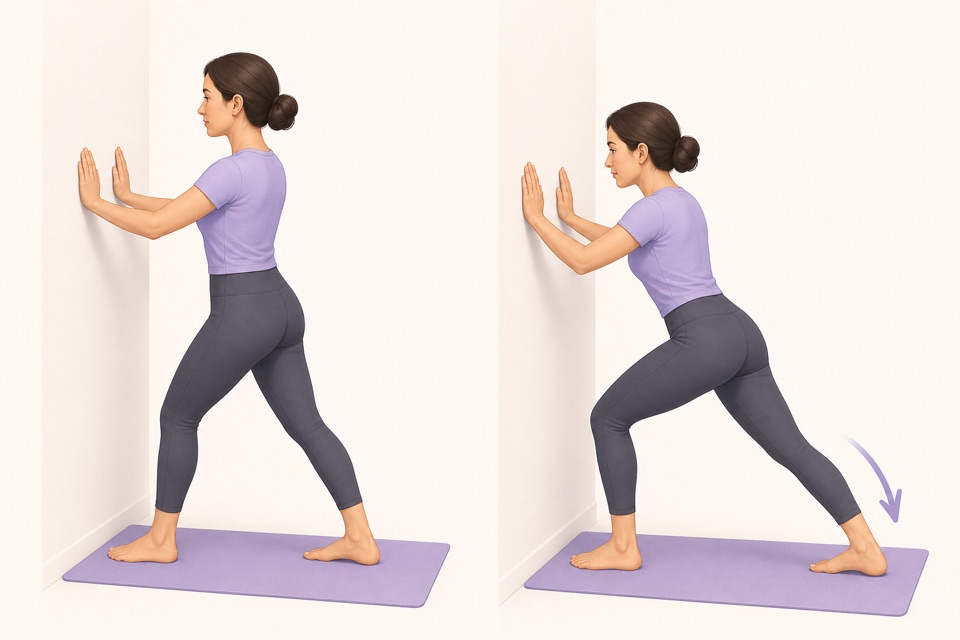
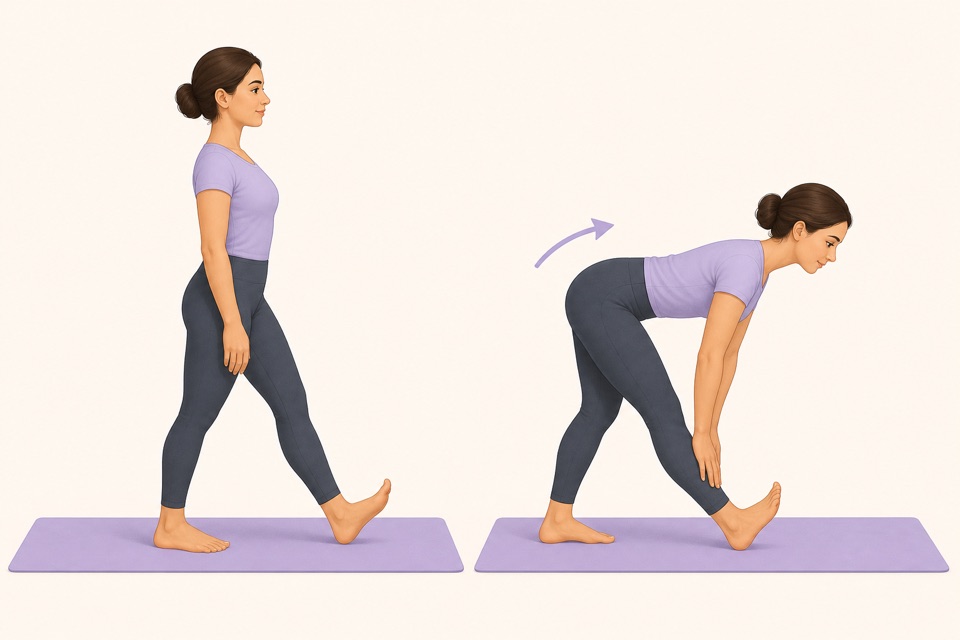
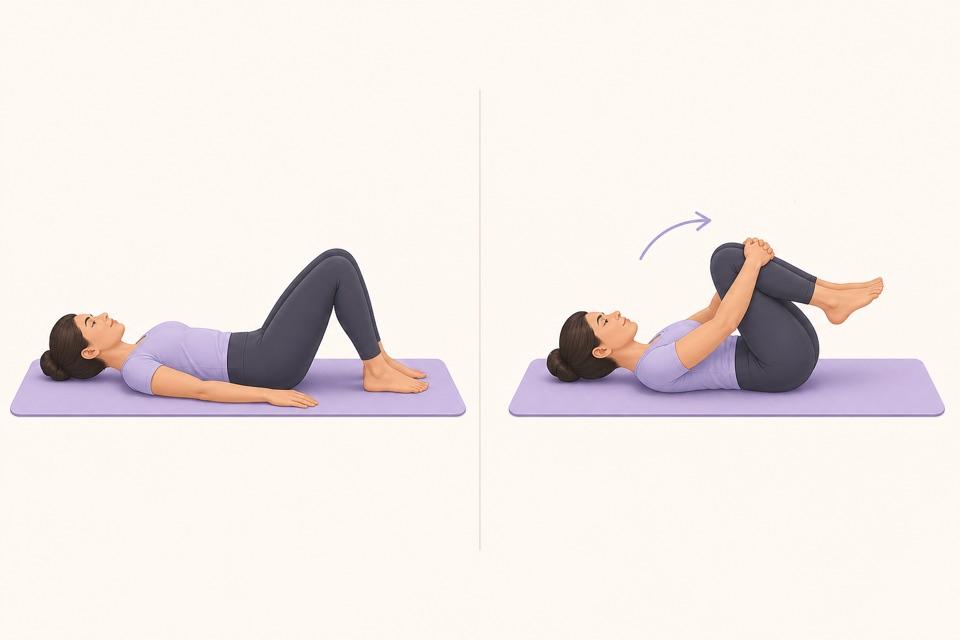
| Move | Time | Best for | Keep it sleep-friendly | | --- | ---: | --- | --- | | Ankle circles and foot flexes | 60 sec | Feet, ankles, lower-leg stiffness | Move slowly, not like a warm-up drill | | Standing calf stretch | 90 sec | Calves and Achilles area | Keep the back heel heavy and the stretch mild | | Seated hamstring stretch | 90 sec | Back of the thigh | Bend the knee so you do not yank the nerve line | | Figure-four stretch | 90 sec | Glutes and outer hips | Keep the crossed leg farther away if needed | | Gentle quad stretch | 60 sec | Front of thigh | Skip if balance feels annoying at night | | Knees-to-chest breathing | 90 sec | Low back and hips | Hold behind thighs, not the knees |
If you only have two minutes, do ankle circles, one calf stretch per side, and quiet breathing. A tiny repeatable routine beats a perfect one you skip.
From Wiggle
Recommended moves
Can stretching help heavy, restless-feeling legs at night?
Gentle stretching may help some people settle heavy or restless-feeling legs because it adds controlled movement without turning bedtime into exercise. But recurring restless legs, strong cramps, tingling, numbness, or sleep-disrupting symptoms deserve proper medical guidance.
MedlinePlus notes that people who often get night leg cramps may be advised to stretch leg muscles before bed. NHS inform gives similar calf-stretching guidance for people who often get leg cramps. Mayo Clinic also lists stretching and gentle massage among self-care steps discussed for restless legs syndrome, while making clear that persistent symptoms need clinical evaluation.
Use that carefully. This routine is a comfort habit for mild everyday tightness, not a diagnosis, cure, or replacement for care.
Should you do leg stretches on the floor or in bed?
Use the floor when you want steadier positions for calves and hamstrings. Use the bed when getting down to the floor would make you abandon the routine. The better surface is the one that lets you move gently and finish calmly.
| Tonight's situation | Better choice | Why | | --- | --- | --- | | Calves feel tight after walking or standing | Floor or wall | Easier to control foot position | | You are already under the covers | Bed | Lower setup cost | | Hamstrings feel sensitive | Bed or supported floor | Easier to bend the knee and reduce intensity | | Balance feels off | Bed or seated version | Less standing work | | You want a fuller wind-down | Mat or rug | More room for hips and knees-to-chest |
For a fully in-bed routine, use bedtime stretches in bed. If your main issue is back stiffness, pair this with lower back pain stretches in bed or the position-first guide to sleeping with lower back pain.
If knee-area stiffness is what you notice most, save the fuller knee stretches routine for daytime and keep bedtime work smaller.
How do you keep bedtime leg stretches from waking you up?
Keep the routine slow, short, and underpowered. Sleep Foundation guidance notes that vigorous exercise close to bedtime can affect sleep for some people, while lighter movement such as stretching or yoga is commonly used as part of a wind-down routine.
Use this checklist:
- Keep the full routine under eight minutes.
- Hold mild tension, not maximum range.
- Breathe normally through each stretch.
- Avoid bouncing or pulsing.
- Skip intense quad, hamstring, or split-like positions.
- Keep phone interaction minimal.
- Finish with the same breathing cue every time.
Mayo Clinic stretching guidance warns against bouncing and forcing a stretch. That matters even more at night because an intense stretch can make the routine feel like training instead of a cue to shut down.
When should you skip or stop bedtime leg stretches?
Skip or stop when the stretch creates sharp pain, numbness, tingling, weakness, dizziness, strong cramping, or symptoms that feel unusual for you. Also get medical advice for new, severe, recurring, injury-related, medication-related, pregnancy-related, or sleep-disrupting leg symptoms.
Here is the simple decision rule: if movement makes your legs feel calmer, stay gentle and finish. If movement makes your legs feel more irritated, stop the routine and switch to quiet breathing or a comfortable resting position.
How can Wiggle make leg stretches before bed easier?
Wiggle removes the annoying part of bedtime stretching: choosing moves, timing holds, remembering both sides, and deciding when you are done. Open one short routine, follow the timer, and let the app give the session a clean ending.
The easiest next step is to save one seven-minute leg wind-down and repeat it for a week. If you want a broader sleep routine, start with good stretches before bed, the night stretching routine, or a guided stretching app for sleep.
Sources
Why we keep it gentle
These guides are written for everyday stiffness and habit-building. They are grounded in mainstream guidance on flexibility, movement, and when to seek medical help.
- Stretching: Focus on flexibilityMayo Clinic
- Muscle CrampsMedlinePlus
- Leg crampsNHS inform
- How Can Exercise Affect Sleep?Sleep Foundation
- Restless legs syndrome - Diagnosis and treatmentMayo Clinic
FAQ
Questions people ask
What are the best leg stretches before bed?
The best leg stretches before bed are gentle calf, hamstring, quad, hip, and ankle movements that keep effort low. Use mild tension, steady breathing, and short holds instead of deep flexibility work.
Can leg stretches before bed help restless-feeling legs?
Gentle movement may make restless-feeling legs easier to settle for some people, but it is not a treatment for restless legs syndrome or recurring night cramps. If symptoms are frequent, painful, worsening, or affecting sleep, ask a qualified clinician.
How long should I hold leg stretches at night?
Hold each stretch for 30 to 45 seconds at mild tension, or use slow ankle circles for 30 seconds per side. The whole routine can be 6 to 8 minutes.
Should bedtime leg stretches be done in bed or on the floor?
Use the floor or a mat when you want more control for calf and hamstring stretches. Use the bed when you are too tired for setup and only need a smaller, easier version.
How can Wiggle help with leg stretches before bed?
Wiggle gives you a short guided routine, clear timers, and a repeatable order, so you do not have to decide which leg stretch comes next when you are already tired.